
Transforming chemical manufacturing efficiency
Enterprise Resource Planning (ERP) systems are revolutionising the chemical manufacturing industry by enhancing operational efficiency and streamlining processes.
This article delves into how ERP systems can significantly improve various aspects of chemical manufacturing, including regulatory compliance, inventory management, batch production, quality control, and financial management.
Readers will learn about the key benefits of ERP, the mechanisms through which these systems operate, and the transformative impact of digital technologies on ERP adoption in the chemical sector.
As manufacturers face increasing pressure to optimise operations and comply with stringent regulations, ERP solutions emerge as a vital tool for achieving these goals. We will explore the benefits of chemical ERP for manufacturing efficiency, how it enhances batch production and formulation management, supports quality control, offers financial advantages, and drives digital transformation.
Research consistently supports the notion that ERP implementations significantly boost operational efficiency in relevant industries.
What are the key benefits of ERP for chemical manufacturing efficiency?
ERP systems provide numerous advantages that enhance the efficiency of chemical manufacturing processes. These benefits include improved regulatory compliance, optimised inventory management, and streamlined production processes. By integrating various functions into a single platform, ERP systems enable manufacturers to respond swiftly to market demands and regulatory changes.
How does ERP improve regulatory compliance in chemical production?
ERP systems enhance regulatory compliance by automating reporting and maintaining comprehensive audit trails. These systems facilitate the management of safety data and ensure that all production processes adhere to industry regulations.
Automated reporting features allow manufacturers to generate compliance reports quickly, reducing the risk of human error and ensuring timely submissions to regulatory bodies.
In what ways does ERP optimise inventory and supply chain management?
ERP systems optimise inventory and supply chain management through real-time tracking and supplier integration. By providing visibility into inventory levels and demand forecasts, these systems help manufacturers maintain optimal stock levels, reducing excess inventory and minimising stockouts.
Case studies have shown that companies using ERP for inventory management experience significant reductions in carrying costs and improved order fulfilment rates.
How does ERP enhance batch production and formulation management?
ERP systems play a crucial role in enhancing batch production and formulation management by providing tools for scheduling and recipe control. These systems enable manufacturers to optimise production schedules, ensuring that resources are allocated efficiently and downtime is minimised.
What role does ERP play in batch production scheduling and optimisation?
ERP systems facilitate batch production scheduling by allowing manufacturers to plan and allocate resources effectively.
Scheduling tools within ERP systems help minimise downtime and ensure that production runs smoothly. By analysing production data, manufacturers can identify bottlenecks and adjust schedules accordingly, leading to increased production efficiency.
How does ERP ensure consistency through formulation and recipe control?
ERP systems ensure consistency in formulation and recipe control by maintaining version control and quality assurance protocols.
These systems allow manufacturers to track changes in formulations and recipes, ensuring that all products meet established quality standards. Traceability features enable manufacturers to quickly identify and address any deviations from the standard formulation, enhancing product quality and safety.
How does ERP support quality control and product standards in the chemical industry?
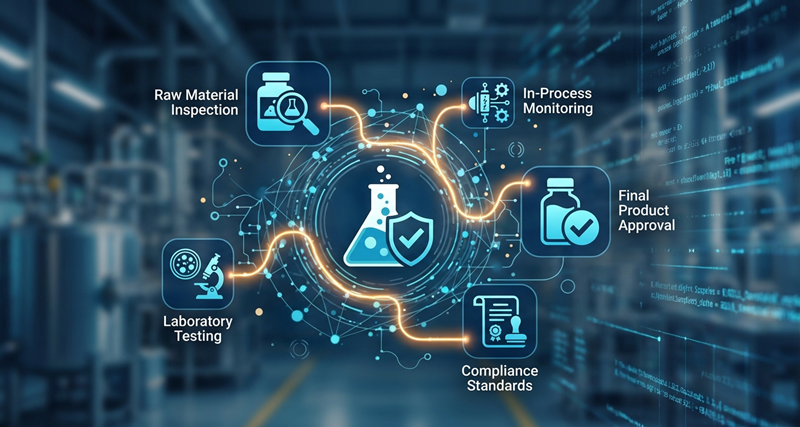
Quality control is paramount in the chemical industry, and ERP systems provide essential features to support this critical function. By integrating quality assurance processes into manufacturing workflows, ERP systems help ensure that products meet stringent industry standards.
What are ERP’s features for in-process quality checks and deviation management?
ERP systems include features for in-process quality checks and deviation management, allowing manufacturers to monitor production quality in real-time. These systems can trigger alerts for deviations, enabling prompt corrective actions. Reporting capabilities within ERP systems provide insights into quality trends, helping manufacturers identify areas for improvement.
How does ERP integrate quality assurance into chemical manufacturing?
ERP systems integrate quality assurance into chemical manufacturing by standardising operating procedures and compliance tracking. By embedding quality checks into the production process, manufacturers can ensure that all products meet regulatory and customer standards.
Continuous improvement initiatives can be supported through data analysis, leading to enhanced product quality over time.
What financial and cost reduction advantages does ERP offer chemical manufacturers?
ERP systems provide significant financial and cost reduction advantages for chemical manufacturers. By enabling real-time cost tracking and profitability analysis, these systems help manufacturers make informed financial decisions.
Indeed, the comprehensive nature of ERP extends beyond financial tracking to encompass a wide array of operational and logistical functions.
How does ERP enable real-time cost tracking and profitability analysis?
ERP systems facilitate real-time cost tracking by integrating financial data with production metrics. This integration allows manufacturers to analyse profitability at various levels, from individual products to entire production lines. By understanding cost drivers, manufacturers can implement strategies to reduce expenses and improve margins.
What budgeting and forecasting tools does ERP provide for chemical operations?
ERP systems offer robust budgeting and forecasting tools that help chemical manufacturers plan for future financial performance. These tools enable manufacturers to create detailed budgets based on historical data and market trends, allowing for more accurate financial planning. Scenario planning features help manufacturers assess the impact of different operational strategies on their financial outcomes.
How is digital transformation driving ERP adoption in chemical manufacturing?
Digital transformation is reshaping the landscape of chemical manufacturing, with ERP systems at the forefront of this change. The adoption of cloud-based ERP solutions and the integration of advanced technologies like AI and IoT (Internet of Things) are driving significant improvements in operational efficiency.
What are the benefits of cloud-based ERP solutions for chemical companies?
Cloud-based ERP solutions offer several advantages for chemical companies, including scalability, cost-effectiveness, and accessibility. These systems allow manufacturers to access critical data from anywhere, facilitating remote work and collaboration. Additionally, cloud solutions reduce the need for extensive IT infrastructure, lowering overall operational costs.
How do AI and IoT integrations enhance chemical industry ERP systems?
Integrating AI and IoT technologies into ERP systems enhances their functionality by providing advanced data analytics and automation capabilities. AI algorithms can analyse production data to identify patterns and optimise processes, while IoT devices can provide real-time monitoring of equipment and inventory levels. This integration leads to more informed decision-making and improved operational efficiency.
| Cost reduction feature | Benefit | Impact level |
|---|---|---|
| Real-time cost tracking | Enhanced visibility into expenses | High |
| Automated budgeting tools | Improved financial planning accuracy | Medium |
| Integrated supply chain management | Reduced inventory carrying costs | High |
In summary, ERP systems are transforming the chemical manufacturing industry by enhancing efficiency, ensuring compliance, and supporting quality control. As digital transformation continues to drive ERP adoption, manufacturers must leverage these systems to remain competitive in a rapidly evolving market.
Conclusion
Implementing ERP systems in chemical manufacturing significantly enhances operational efficiency, regulatory compliance, and quality control. By integrating various functions into a single platform, manufacturers can respond swiftly to market demands while optimising resources. Embracing these digital solutions is essential for staying competitive in an evolving industry landscape. Discover how Sage X3 for chemical businesses can transform your manufacturing processes today.
FAQs
Sage X3 automates core processes, integrating data across departments, and providing real-time insights. It enables chemical companies to modernise operations, improve agility, and stay competitive in a rapidly evolving market.
Sage X3 integrates quality checks throughout production, from raw material intake to final product release. It enforces testing protocols, records results, and blocks non-conforming lots, ensuring consistent quality and compliance.
Sage X3 connects every part of the chemical value chain – from R&D and formulation to production, compliance, distribution, and customer service. By unifying processes and data, it improves efficiency, ensures traceability, and supports smarter decision-making across the business.
Sage X3 provides real-time visibility of inventory, production, and demand. It helps manage suppliers, track shipments, and optimise planning, ensuring timely deliveries, reduced costs, and better customer service.
Sage X3 streamlines recipe management by enabling precise control over ingredients, proportions, and production steps. It helps adjust recipes for different batch sizes, maintains version control, and ensures compliance with safety and quality standards, giving manufacturers consistency and efficiency in every production run.
Stay informed about upcoming rules and run regular audits of current practices. Ensure your ERP can capture required data for compliance reporting and engage experts for training and implementation support. Robust data governance and a tested DPP data model let you adapt quickly and maintain compliance as regulations evolve.
Important KPIs during implementation include batch trace time, DPP assembly time, and month‑end reconciliation accuracy. These measures indicate whether compliance‑critical processes are working. Also track inventory accuracy and improvements in financial visibility to quantify broader operational impact and ROI.
Sage X3 enables detailed tracking of raw material attributes and finished‑product footprints, which is essential for accurate ESG reporting. The system helps capture and analyse data for Scope 1, 2 and 3 emissions and supports tracking of material reuse and waste streams. This capability not only supports compliance but also strengthens a company’s sustainability programmes and reporting confidence.
AI provides predictive and prescriptive insights that improve operational decisions. Examples include demand forecasts that reduce stockouts and overstocks, formula optimisation that improves yield or lowers cost, and predictive maintenance that reduces downtime. When integrated with an ERP like Sage X3, AI turns real‑time operational data into actionable guidance that improves efficiency and regulatory responsiveness.
Sage X3 delivers stronger compliance, improved inventory accuracy, and clearer financial visibility for chemical manufacturers. The platform also supports sustainability reporting by linking operational data to ESG metrics, helping companies demonstrate compliance and track environmental impact. In short, Sage X3 streamlines operations and improves the quality of decision making.
Sage X3’s sophisticated inventory management solutions empower chemical companies to handle hazardous materials with exceptional accuracy. It offers real-time insights into inventory levels, guarantees appropriate storage, and improves inventory forecasting to minimise waste.
Read more about Sage X3 Chemical ERP system
Sage X3 offers comprehensive compliance management solutions designed to assist chemical manufacturers in navigating complex regulatory landscapes. It ensures accurate batch traceability, tracking of raw materials, and safety data sheets, thereby enhancing the efficiency of compliance procedures.
Contact our team to learn more
Sage X3 enables chemical manufacturers to streamline batch production, optimise formulas and maintain consistent product quality. It supports precise measurements and scaling for efficient production.
Take a look at the Sage ERP System implementation in a pharmaceutical manufacturer and distributor
We are a fully accredited Sage North America partner and experts in international implementations of Sage X3. Many of our customers are in North America and are supported by our team in the UK. Moreover, we proudly assist many of our customers with their global subsidiaries, providing comprehensive support every step of the way.
Meet the team of Sage X3 consultants and professionals
Sage X3 is highly configurable and flexible. Whether you deploy the system on-premises or in the cloud, Sage X3 licensing is subscription pricing based—no more capital expenditure and reducing your ROI timeline.
Depending on your preference, Sage X3 can be deployed in the cloud, on-premises or as a hosted solution. However deployed, access is through a standard (HTML 5 compatible – such as Chrome, Firefox, Edge, Safari etc.) Internet browser.
Sage X3 is well-suited to chemical businesses and Inixion has several ‘chemical’ based customers. Some of the features Sage X3 offers chemical businesses are:
- Mixed-mode manufacturing process planning
- Formula/recipe and potency management
- Extensive quality control and traceability of lots, sub-lots, ingredients and allergens
- Forward/backward scheduling
- Stock status, shelf-life management and expiry tracking
- Distribution and packaging management
Access our Chemicals without Chaos guide for more information.