
Key reporting features

Sage Intacct’s reporting toolkit is designed to deliver timely insights and support decision-making across complex organisations. These capabilities give finance teams the controls and visibility needed for effective analysis and planning. Notable features include:
- Real-time Reporting: Live access to current financial data helps organisations react to changes and make decisions grounded in today’s numbers.
- Custom Report Writer: Lets finance build reports that match business requirements without depending on IT, improving speed and autonomy.
- Multi-dimensional Reporting: Enables analysis across multiple dimensions, such as department, location or project, so you can understand performance at granular levels.
| Reporting Feature | Description | Benefit |
|---|---|---|
| Real-time Reporting | Instant access to current financial data | Enables timely decision-making |
| Custom Report Writer | Tool for creating tailored reports | Increases flexibility and user autonomy |
| Multi-dimensional Reporting | Analyse data across various dimensions | Supports comprehensive performance analysis |
Together, these features equip finance teams to respond quickly to changing conditions and to base decisions on reliable, up-to-date information.
How do Custom Reports and Dashboards enhance financial data visibility?
Custom reports and dashboards increase visibility by delivering the exact metrics stakeholders need in a clear, visual format. With the Custom Report Writer, finance teams can assemble targeted reports that reflect strategic priorities without coding or heavy IT involvement. Dashboards surface KPIs and trends in an instantly digestible way, helping decision-makers spot issues and opportunities quickly and act with confidence.
What role does real-time financial analytics play in decision-making?
Real-time analytics provide the continuous visibility organisations need to operate with agility. Sage Intacct’s live reporting helps teams identify trends, spot anomalies, and adjust plans as conditions change. That immediacy reduces lag between insight and action, improving operational responsiveness and overall financial management.
Automation capabilities
Sage Intacct’s automation reduces manual effort and strengthens accuracy across reporting processes. By standardising routine tasks, the platform frees finance teams to focus on analysis and strategic work instead of repetitive administration.
Automated workflows remove repetitive reporting steps and ensure consistent processing. Recurring transactions are handled automatically to lower the risk of manual entry errors, while scheduled reporting delivers the right reports to the right people at predefined times, saving time and keeping stakeholders informed.
How does Sage Intacct automate financial reporting to increase accuracy and efficiency?
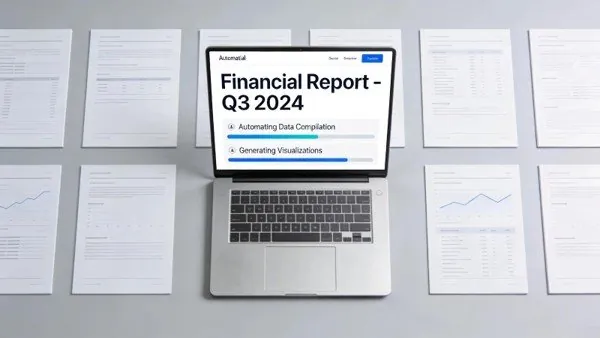
Automation in Sage Intacct standardises procedures to cut common manual errors. By automating recurring entries and report generation, organisations shorten reporting cycles and free resources during month-end closes. The result is more reliable reports, faster close times and timely insights that support strategic decisions.
Which financial report automation processes reduce manual errors?
Key automation processes in Sage Intacct that reduce manual mistakes include:
- Automated Workflows: Predefined workflows streamline invoice and approval processes, lowering the chance of human error.
- Dynamic Report Generation: Reports that refresh automatically with current data reduce reliance on static, out-of-date spreadsheets.
- User-Defined Templates: Standardised templates ensure consistent formats and reduce input inconsistencies across reports.
Used together, these features increase reporting reliability and let finance teams redeploy time to higher-value analysis.
Enhancements to financial insights and decision-making
Sage Intacct strengthens insight and decision-making by delivering timely, accurate metrics that stakeholders trust. With immediate access to performance indicators, teams can pivot strategy faster and focus on analysis that drives outcomes.
- Improved decision-making: Live access to data helps teams adjust strategy quickly based on actual performance.
- Focus on strategic analysis: Automation reduces routine work so finance can concentrate on trend analysis and planning.
- Trust among stakeholders: Consistent, accurate reporting builds confidence among internal teams and external partners.
This boost in insight helps organisations compete more effectively in fast-moving markets.
In what ways does Sage Intacct support multi-entity and consolidated reporting requirements?
Sage Intacct provides strong support for multi-entity consolidation, vital for organisations with multiple legal entities or business units. Automated consolidation processes speed group reporting while maintaining accuracy across subsidiaries.
The platform’s multi-currency features simplify international reporting, and integrated inter-company management reduces manual reconciliation, accelerating close cycles and improving consolidated visibility.
How is multi-entity financial consolidation facilitated within Sage Intacct?
Sage Intacct automates currency translation and consolidations while offering real-time visibility across entities. This reduces the manual work traditionally required to produce group financials, resulting in more accurate consolidated reports that support strategic decision-making.

What compliance and regulatory complexities does Sage Intacct address in reporting?
Sage Intacct helps businesses meet regulatory requirements through built-in audit trails and automated compliance reporting. These capabilities support transparency and simplify audit preparation.
- Built-in audit trails: Traceable records document transaction history for clearer accountability.
- Automated compliance reporting: Prebuilt reporting helps demonstrate adherence to financial regulations.
- Real-time data access: Continuous access to records keeps organisations prepared for audits at any time.
These features help reduce regulatory risk and maintain best-practice financial governance.
How does Sage Intacct integrate with business intelligence tools to extend reporting capabilities?
Integrations with BI platforms expand Sage Intacct’s reporting by combining financial data with broader analytics. Connecting to tools like Power BI and Tableau enables richer visualisation and deeper analysis beyond standard financial reports.
- Unified data access: BI integrations pull together disparate sources for consistent, consolidated insights.
- Real-time updates: Connected BI dashboards reflect current financials, ensuring decision-makers see the latest data.
- Customisable dashboards: Tailored BI views let teams monitor the metrics most relevant to their roles.
This integration layer amplifies the value of Sage Intacct data for more strategic analysis.
Which analytics and BI platforms are commonly integrated with Sage Intacct?
Sage Intacct commonly integrates with leading analytics platforms, including:
- Power BI: Adds flexible visualisations for clearer financial storytelling.
- Tableau: Enables interactive dashboards for collaborative analysis.
- Qlik: Supports advanced visual analytics to surface deeper insights.
These integrations give organisations more options for exploring and sharing financial intelligence.
What differentiates Sage Intacct reporting from other financial reporting solutions?
Sage Intacct’s cloud-first design, automation depth and real-time insights set it apart from many legacy ERP reporting tools. The platform is built for scale and day-to-day agility, helping finance teams shift from manual processes to continuous reporting.
- Cloud-native architecture: Provides secure, scalable access to financial data from anywhere.
- Advanced automation: Reduces repetitive tasks and speeds up reporting cycles.
- Real-time insights: Continuous data updates support clearer, more timely planning.
These strengths make Sage Intacct an attractive choice for organisations that need efficient, reliable financial reporting.
How does Sage Intacct compare to Sage X3 and Sage 200 in reporting functionality?
Sage Intacct generally offers more advanced reporting features than Sage X3 and Sage 200, particularly around real-time visibility, user customisation and multi-entity consolidation. Key differences include:
- Real-time reporting: Sage Intacct delivers live access to financials, while other systems may rely on less frequent updates depending on configuration.
- Customisation options: Intacct’s reporting tools give users greater control to tailor outputs without heavy technical support.
- Support for multi-entity operations: Intacct simplifies cross-entity consolidation with automated processes that other products can handle less efficiently.
This contrast explains why many organisations choose Sage Intacct for modern, consolidated reporting. To delve deeper into this comparison, see our detailed resources on reporting differences between Intacct and Sage 200.
Why is Sage Intacct considered a leading choice for cloud-based financial reporting?
Sage Intacct is widely adopted for cloud-based reporting thanks to its broad feature set and user-focused design. Regular enhancements and an emphasis on usability make it a fit for organisations seeking scalable, modern finance systems.
- Comprehensive features: A wide range of reporting tools adapts to diverse financial needs.
- Continuous innovation: Ongoing updates align the platform with evolving industry requirements.
- Convenient cloud access: Cloud delivery supports collaboration and remote access to financial information.
These qualities help explain the platform’s popularity among businesses seeking efficient cloud reporting solutions.
What evidence supports the business impact of Sage Intacct reporting?
Evidence from customers and case studies shows Sage Intacct can materially improve reporting efficiency and decision-making. Organisations report faster reporting cycles, higher data accuracy and clearer insights that support better outcomes.
- Quantitative benefits highlighted: Users often see substantial reductions in reporting time, frequently up to 50%, freeing teams for strategic work.
- Case studies showcasing ROI: Documented examples demonstrate cost savings and productivity gains after implementation.
- Customer testimonials emphasising Success: Customers report stronger ability to interpret financials and act quickly on insights.
These results underscore the practical business value of adopting Sage Intacct for reporting.
Which case studies demonstrate ROI from implementing Sage Intacct reporting?
Several case studies highlight the ROI organisations have seen after moving to Sage Intacct reporting. Examples include:
- Healthcare organisation: A provider reported a 40% reduction in reporting time, improving responsiveness. – Ref: Sage
- Non-Profit Organisation: A non-profit centralised reporting and improved transparency for better fund management. – Ref: Sage
These stories illustrate tangible improvements across industries and encourage consideration of Intacct as a reporting platform.
What industry trends validate the growing demand for advanced reporting solutions?
Several industry trends reinforce the need for sophisticated reporting solutions like Sage Intacct. Organisations are increasingly focused on transparency, speed and automation to stay competitive.
- Real-time reporting demand: Faster access to financial data is increasingly essential in dynamic markets.
- Rise of cloud-based financial solutions: Cloud platforms are favoured for their scalability and ease of access.
- Growing demand for automation: Automation is becoming a baseline expectation to improve efficiency and accuracy.
These trends point to sustained demand for advanced financial reporting tools that support modern business practices.
Conclusion
Sage Intacct modernises financial reporting with features that deliver timely insights, streamline processes and improve accuracy. For organisations that need scalable, transparent reporting and faster decision cycles, Intacct offers a practical path forward. Explore Sage Intacct’s reporting capabilities to see how they can support your financial strategy and help your team focus on the analysis that matters.
FAQs
Sage Intacct can significantly reduce reliance on Excel by bringing financial reporting, consolidation, dashboards and automated processes into one system. Excel may still have a role in financial analysis, but finance teams no longer need to depend on manually maintained spreadsheets for essential management information.
Sage Intacct pricing depends on your organisation’s requirements, including the modules selected, number and type of users, entities and implementation complexity. A tailored quotation provides a more accurate picture of subscription, implementation and integration costs. Request Sage Intacct pricing.
Implementation times vary depending on the number of entities, users, modules, integrations and reporting requirements. A straightforward implementation may take a few months, while more complex projects require additional time for configuration, migration and testing.
At Inixion, we focus on getting the initial design right, ensuring the solution supports your processes and reporting requirements from the outset.
Look for multiple support channels, phone, email, plus helpful online resources like tutorials and forums. Onboarding help or a dedicated account manager is valuable for smoothing the initial setup and getting the most from the tool.
Measure ROI by tracking time saved, reductions in errors, and lower bookkeeping costs. Include less tangible benefits like faster decisions and improved cash flow forecasting. Regularly review these metrics to see if the software delivers expected value.
Choose providers that use strong security: encryption, two-factor authentication, and regular third-party audits. Review privacy policies and compliance with regulations like GDPR. Also, train staff on secure password practices and role-based access to limit exposure.
Sage Intacct delivers consolidated, real-time reports across entities and currencies so teams see current performance at a glance. That visibility enables faster, more confident decisions and frees finance to focus on strategy rather than manual reporting.
Migration costs vary by company size, system complexity, and customisation needs. Expect subscription fees, implementation services, and training as primary costs. Many organisations find that the efficiency and automation gains deliver a strong return on investment over time.
Sage Intacct includes controls and audit trails that support regulatory compliance. Automated processes reduce manual errors, while reporting capabilities make it easier to produce statements that align with standards such as GAAP and IFRS. These features simplify audits and strengthen governance.
Sage Intacct fits medium to large organisations—especially service-led or project-led businesses like professional services, healthcare, construction, legal and financial services. These sectors benefit from Intacct’s multi-entity, multi-currency, automation, and reporting features, which help finance teams scale and stay responsive to changing needs.
Absolutely, Sage Intacct boasts powerful integration capabilities with a wide array of business systems, including CRM, payroll, and inventory management software. Sage Intacct offers integration to many systems with open APIs for custom connections to tools like Harvest (time tracking), HubSpot (CRM), or your PSA (Professional Services Automation) software.
This seamless integration ensures effortless data flow between systems, drastically reducing manual data entry and significantly boosting overall operational efficiency. By connecting Sage Intacct with your other critical platforms, your business gains a unified, holistic view of its financial and operational data, thereby enhancing decision-making and operational effectiveness across every department.
Sage Intacct seamlessly integrates with many other business systems and provides a robust platform for further integration options.
Sage Intacct supports multi-entity structures with automated intercompany transactions and consolidations, making it ideal for streamlining finance across offices or subsidiaries or LLP structures.
Yes. Its real-time reporting, consolidation, and audit-ready transparency make it ideal for businesses preparing for investment, acquisition, or rapid scale.
Sage Intacct automates complex revenue recognition in line with IFRS 15, ensuring compliance and accurate reporting without spreadsheets.
Yes. You can migrate systems like QuickBooks and Sage 50 to Sage Intacct with minimal disruption.
We offer UK-based support, training, and ongoing consultancy to ensure Sage Intacct evolves with your business’s growth and strategy.
Sage Intacct supports UK VAT, audit trails, role-based access controls, and standards like IFRS 15.
Sage Intacct enables accurate project accounting, flexible billing models (fixed fee, time & materials, milestone), and detailed profitability tracking across clients, projects, or departments.
Sage Intacct is a cloud-native financial management platform designed for growing businesses. Unlike entry-level tools, it offers real-time reporting, automation, and multi-entity capabilities—ideal for complex services organisations.
Yes, you can extend Intacct through Sage Intacct Marketplace, where you will find a wide selection of add-ons to suit your needs.
Inixion provides ongoing training and support. As a Sage Intacct customer, you’ll also have access to comprehensive Sage Intacct training programmes through Sage University. This includes a wide range of courses to help you make the most of your Sage Intacct experience.
Sage Intacct integrates with a wide range of business applications, including CRM, payroll, and industry-specific solutions, and with hundreds of pre-built integrations available through Sage Intacct Marketplace.
Sage Intacct also supports custom integrations through its open APIs, with an option for business users to configure integrations using Sage Intacct Data Flows.
Inixion will help to integrate the software your business needs during implementation.
Sage Intacct is ideal for growing or mid-sized businesses, typically with over £10 million in annual revenue or more than 250 employees.
Sage Intacct pricing is tailored to your organisation’s size and specific needs. To get a customised quote, please get in touch with us. We’ll discuss your pain points and requirements and share a Sage Intacct plan option that suits you.
Sage Intacct subscriptions are typically on an annual basis.
Implementation timelines vary based on business complexity, but small to mid-sized businesses typically go live within 2-4 months. Our experienced consultants ensure a fast, efficient deployment tailored to your needs.
Sage Intacct is a comprehensive system, and for a smooth implementation, we recommend leveraging Inixion’s consultants. We’ll create a customised plan to meet your deadlines and help fit the software to your business needs.
Sage Intacct is a cloud-native financial management solution that streamlines financial management in small to medium-sized growing organisations. It provides automation and trusted insights across financials, planning, HR, payroll and more.