Sage Future San Francisco 2026 gave a clear view of where Sage is heading next, and for Inixion, it was a valuable chance to hear that direction first-hand.
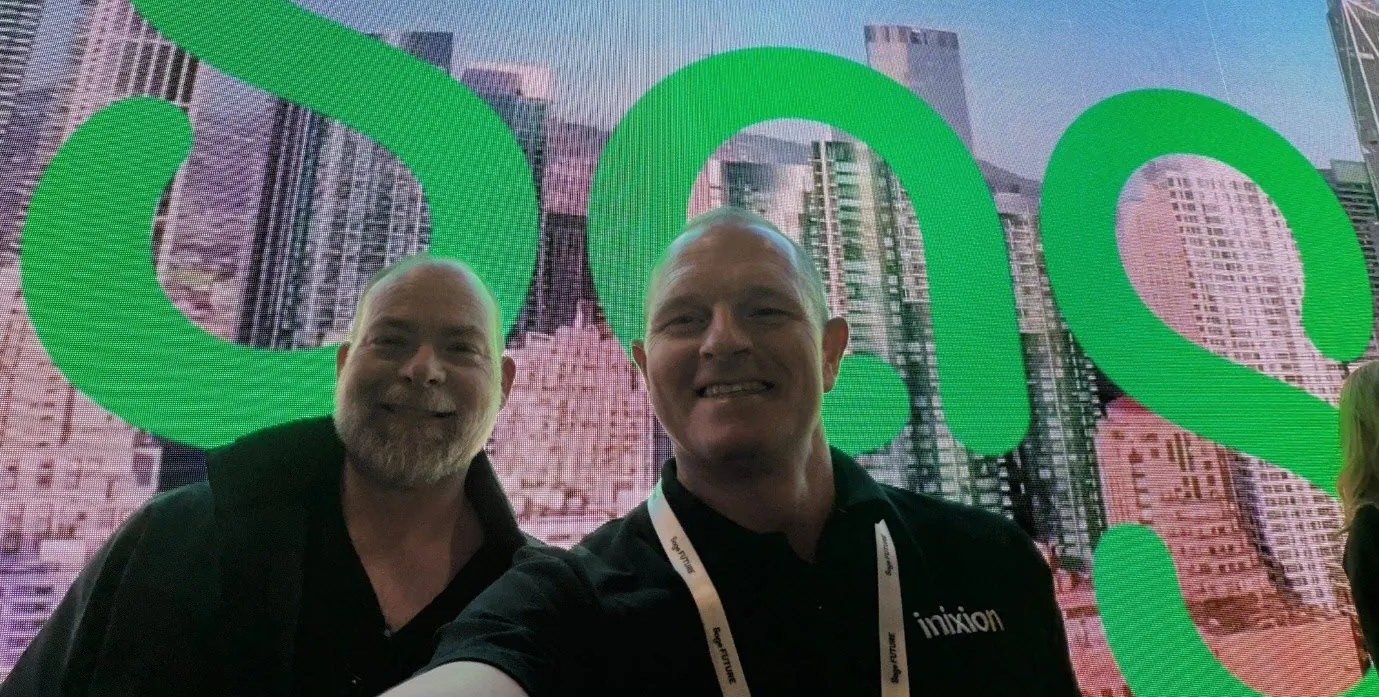
Andrew Cairns, Inixion Operations Director, and Greg Hackney, Inixion Sales Director, attended the event and joined sessions covering AI, finance transformation, Sage X3 innovation, manufacturing execution, and go-to-market strategy. The overriding theme was clear: Sage is no longer talking about AI as a future concept. It is building AI into finance and ERP in ways that are intended to be practical, governed, and commercially useful.
What stood out most was that the conversation was not purely technical. Throughout the event, the message was consistently tied back to business outcomes: reduced manual work, improved visibility, faster decision-making, stronger control, and more time for teams to focus on work that adds real value.
Trustworthy AI was front and centre
One of the strongest themes from the conference was Sage’s position on trustworthy AI. The finance keynote focused heavily on confidence, control, and accountability, arguing that AI in finance cannot be a black box. Instead, it needs to be explainable, auditable, and grounded in real workflows, with users staying in charge of decisions. Sage also highlighted its partnership with PwC around “Beyond the Black Box”, aimed at setting a higher standard for responsible AI in finance.
That matters because finance leaders are not looking for automation at any cost. They want technology that improves speed and accuracy without reducing trust. Sage’s message was that AI should support judgment, not replace it, and that is likely to resonate strongly with organisations that want to modernise finance while still keeping control and accountability where they belong.
The business case for AI is getting more tangible
The event included several examples that moved the AI conversation beyond theory. One case shared on day one showed Sage AI Close Agent saving more than 100 hours per department, improving accuracy, and freeing finance staff to focus on higher-value work. The New York Yankees finance session reinforced the same idea from another angle, that the real value of automation is not just speed, but freeing people up for analysis, judgment, and more strategic work.
That is an important shift. AI is increasingly being positioned not as an experiment, but as a practical way to reduce repetitive effort, improve visibility, and help organisations operate with more agility. For finance teams, that means a stronger close process, faster insight, and more capacity. For business leaders, it means better access to the information needed to make decisions with confidence.
Sage X3 is moving from system of record to system of action
For Sage X3, the standout message was the move toward agentic workflows and intelligent agents. A phrase repeated across the sessions summed it up well: a chatbot answers, an agent executes. The direction of travel is for X3 to move beyond static, user-triggered workflows and towards systems that can detect events, reason using business context, and take or recommend the next action automatically.

In practical terms, this could mean finance, operations, and supply chain teams spending less time waiting for issues to surface manually. Whether it is an overdue invoice, a production exception, or a sales order problem, the system is being shaped to identify the issue sooner and help move the right process forward faster. Sage also stressed that these capabilities are being built with strict access controls and real-time data precision, particularly through GraphQL and its broader data-first architecture.
The business benefit is not just automation. It is greater speed, less friction, better prioritisation, and more proactive management of the issues that slow businesses down.
Manufacturing innovation felt especially practical
One of the strongest sessions from a business-value point of view focused on AI-embedded manufacturing planning, scheduling, and execution integrated with Sage X3 manufacturing. The examples shown addressed common manufacturing pain points such as fragile manual scheduling, bottlenecks, material constraints, setup time, quality checks, and late deliveries. The platform was positioned as a way to improve scheduling confidence, increase responsiveness, and create more real-time visibility on the shop floor.
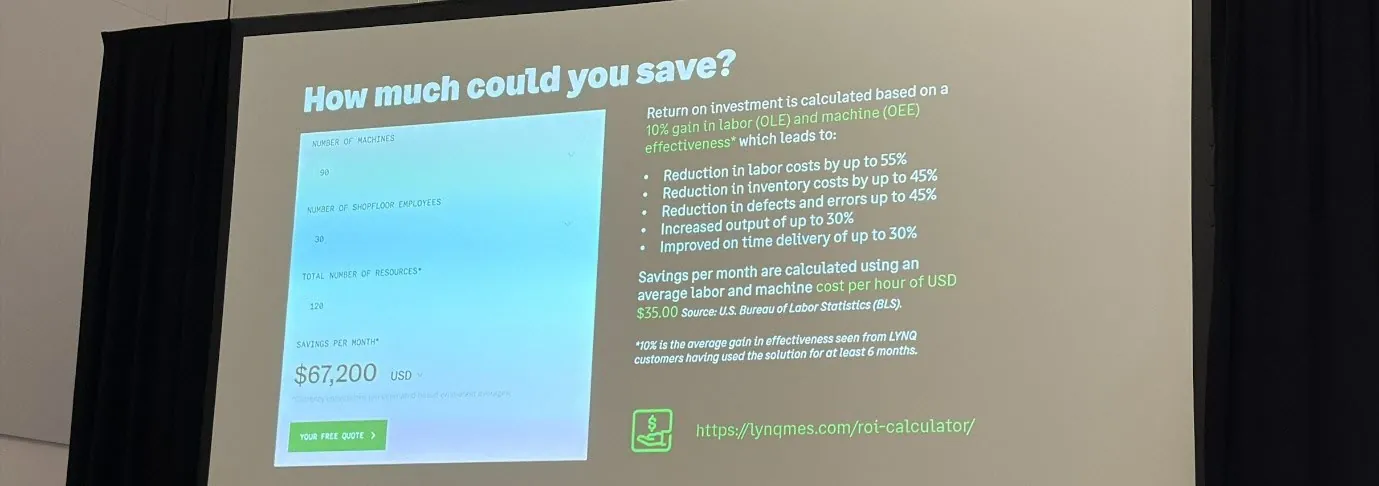
What made this session particularly compelling was the commercial case behind it. The examples shared included a chemicals manufacturer reducing inventory by $4 million in six months, and typical customer outcomes of at least a 10 per cent gain in effectiveness, with one example showing around $67,000 per month in value from better utilisation. The wider message was that better planning and execution are not just operational wins; they can have a very direct financial impact.
There was also a strong, continuous improvement story. Better visibility into labour, equipment, downtime, and quality was framed as a way to help manufacturers identify losses, engage teams, and improve performance over time, rather than simply measuring output after the fact.
The market opportunity is there, but adoption is still early
The product marketing session added useful market context. Research shared during the session showed that 78 per cent of CFOs want more process automation and 86 per cent see AI as an enabler, yet only 6 per cent are using AI tools daily, and only 1 per cent are actively implementing them. That gap suggests a market that is highly aware of the need, but still early in practical adoption.
For partners and customers alike, that creates opportunity. Businesses are looking for ways to improve productivity, resilience, and decision-making, but many are still trying to work out what practical adoption should look like. The vendors and partners who can connect AI and ERP innovation to real business outcomes are likely to stand out.
Sage X3 Builder and no-code development point to a more flexible future
Another notable theme from Sage Future was how much attention Sage is giving to extensibility and faster development within the Sage X3 ecosystem. The Sage X3 Builder session showed how the platform is evolving to support safer, upgrade-friendly customisations, richer GraphQL APIs, React-based UI changes, and simpler packaging and deployment. For partners and customers alike, the direction of travel is clear: make it easier to extend X3 without creating the kind of complexity that makes future upgrades painful.
What stood out even more was the focus on low-code and no-code development. In the strategy session, Sage demonstrated how new applications and modules can be generated far more quickly than traditional ERP development would allow, with a strong emphasis on reducing time to value. That is important because it supports one of the broader messages from the conference, that ERP needs to be more adaptable to changing business needs, industry requirements, and operational processes. For customers, the benefit is not just technical flexibility. It is the ability to respond faster, bring new capabilities online more quickly, and shape the system around the realities of the business.
The X3 roadmap is also about faster value, stronger vertical fit, and more deployment choice
Beyond AI itself, Sage also used the event to reinforce how it wants Sage X3 to evolve as a modern, product-centric ERP platform. A major part of that story was speed, not just in terms of performance, but in how quickly customers can deploy, adopt, and realise value. The roadmap sessions highlighted faster onboarding, rapid implementation models, stronger vertical propositions, and a growing focus on industry fit, particularly in manufacturing and distribution. The message was that businesses should not have to wait years to access meaningful innovation, and that ERP needs to fit the operational rhythm of the customer, not the other way around.
There was also a clear emphasis on deployment flexibility and ecosystem growth. Sage is continuing to support different deployment models, including partner-hosted, Sage-hosted, and hybrid approaches, while expanding what is possible around connected applications, add-ons, reporting, e-invoicing, and manufacturing execution. That matters from a business point of view because it gives customers more choice in how they modernise, without forcing a one-size-fits-all model. It also strengthens the wider X3 proposition, combining AI, cloud-readiness, vertical capability, and extensibility into a more commercially relevant story for businesses that need enterprise capability without compromise.
A strong message for partners, too
Sage Future was not just about product announcements. It was also about positioning, proof points, and partner enablement. The message “when we win, we win together” came through strongly, alongside a push for more customer stories, clearer market messaging, and better tools to help partners tell the Sage X3 story around trusted AI, scale, resilience, and product-centric businesses. The event also highlighted a £5.6 billion North America ERP opportunity in manufacturing and distribution by 2029.
For Inixion, that reinforces something important. The technology story matters, but it is the customer outcome story that will convert interest into action. Buyers still want confidence, relevance, proof, and a clear sense of business value.
Final thoughts
The biggest takeaway from Sage Future San Francisco 2026 was that Sage is moving quickly, but with a clear emphasis on trust, governance, and practical value.
AI is becoming more deeply embedded across finance, manufacturing, and Sage X3, but the message was not about replacing people. It was about helping teams work faster, act earlier, and spend more time where they add the most value. For businesses evaluating what comes next in finance and ERP, that is a much more meaningful conversation than AI hype alone.
For Inixion, the event was a useful reminder that the future of ERP is not just better record-keeping. It is a more intelligent action, stronger visibility, and better business performance, delivered in ways customers can actually trust.