As businesses move through digital transformation, selecting the right financial management platform is a strategic choice. This article compares Sage 200 and Sage Intacct across the features that matter: multi entity accounting, integration, automation and user experience, so you can match capabilities to your operational needs and long term goals.
Key takeaways
- Sage Intacct is a cloud-native finance solution built for automation, scalability and multi-entity management.
- Sage 200 offers flexible deployment and stronger inventory and customisation capabilities.
- Sage Intacct is typically better suited to cloud-first, growing organisations, while Sage 200 can suit businesses needing greater operational control.
- The right choice depends on your reporting needs, deployment preferences, integrations and growth plans.
- If you’re unsure whether Sage 200 is still performing for your business, you can access our readiness assessment here.
Key features
Sage 200 and Sage Intacct each target different business needs. Their primary differences come from architecture; deployment options and the industry‑specific features they prioritise.
Sage Intacct:
Sage Intacct’s cloud‑native design delivers clear advantages in scalability, accessibility and centralised visibility. Its multi‑entity capabilities make consolidated finance reporting straightforward for businesses with multiple legal entities, while automation speeds up routine accounting tasks and shortens reporting cycles. Real‑time cloud access gives finance teams the timely insight needed for faster decisions.
Sage 200:
Sage 200 provides deployment choice: cloud or on‑premises, making it attractive for businesses that need tighter control over data and security. It offers robust inventory management and order processing tools, plus highly customisable reporting that serves manufacturing and distribution workflows particularly well.
Functionalities
The functional focus of each system reflects its target market and technical approach. Sage Intacct emphasises cloud scalability and automation; Sage 200 emphasises flexible deployment and deep operational features.
For businesses prioritising a modern, cloud‑first finance platform, Sage Intacct provides powerful multi‑entity tools and automation that support complex structures and digital transformation initiatives.
Integration capabilities
Integration is key to maintaining accurate data flows and operational efficiency. Both Sage 200 and Sage Intacct support integrations via APIs and third‑party connectors, but their architectures influence how seamless those connections feel.
| Software | Integration Method | Benefit |
|---|---|---|
| Sage 200 | On‑premises APIs | Local control and lower latency for on‑site systems |
| Sage Intacct | Cloud APIs | Real‑time updates and broad accessibility |
Overall, Sage Intacct’s cloud approach typically offers greater flexibility for businesses with distributed teams or multiple entities.
User experience

User experience affects adoption, productivity and the speed at which teams realise value. Interface design, accessibility and learning requirements all play a part.
- Sage Intacct offers a streamlined, intuitive interface that reduces onboarding time and exposes core workflows quickly.
- Sage 200 delivers deep functionality that can require more training to master, but supports extensive customisation for specialised processes.
What are the primary deployment and architectural differences between Sage 200 and Sage Intacct?
Sage 200 can run on‑premises or in the cloud, giving businesses a choice over where data and applications reside. Sage Intacct is cloud‑only, bringing automatic updates, simplified maintenance and remote accessibility. Each option has trade‑offs for cost, control and IT overhead.
How does on‑premises Sage 200 compare to cloud‑based Sage Intacct?
On‑premises deployments typically provide tighter data control and can suit strict compliance needs. Cloud solutions like Sage Intacct reduce infrastructure burden, scale more easily and often accelerate feature delivery. Businesses should weigh security, compliance and total cost of ownership when comparing the two approaches.
What are the implications of cloud computing adoption for financial software?
Cloud adoption shifts the balance toward flexible access, faster deployments and improved collaboration. For finance teams, that means real‑time reporting, less manual reconciliation and easier integrations with other cloud systems, advantages that favour cloud‑native platforms.
Which core financial management features differentiate Sage 200 and Sage Intacct?
Key distinguishing features include:
- Real‑time reporting: Sage Intacct offers strong real‑time reporting and templates to support timely decisions.
- Customisable dashboards: Sage Intacct provides tailored dashboards that reflect specific operational KPIs.
- Multi‑entity management: Sage Intacct is built to consolidate across entities with less manual effort.
How do multi‑entity accounting and financial reporting capabilities compare?
Multi‑entity accounting is a core strength of Sage Intacct’s architecture, making consolidated reporting and inter‑entity eliminations straightforward. Sage 200 can achieve similar results but usually requires additional configuration and customisation.
What levels of financial automation are offered by each solution?
Automation varies between platforms:
- Sage Intacct automates billing, contract and expense workflows to reduce manual entry and error.
- Sage 200 supports automation but often needs tailored workflows to reach the same level of efficiency.
The comparison of Sage 200 and Sage Intacct highlights how a cloud‑native design can simplify automating multi‑entity processes and real‑time reporting.
How do integration and automation capabilities compare between Sage 200 and Sage Intacct?
Both platforms integrate with third‑party systems, but Sage Intacct’s cloud APIs and native connectors typically make integration and automation quicker to implement and manage. Sage 200 integrations may require extra development or middleware to match that level of automation.
Which ERP and CRM systems does each software seamlessly integrate with?
Sage Intacct’s cloud focus makes it straightforward to connect with modern systems via native integrations and API‑driven connectors. Sage 200 can integrate with the same ecosystem, but may need additional custom work for specific third‑party solutions.
What are the workflow automation features supporting business efficiency?
Workflow automation in Sage Intacct reduces processing time and increases accuracy for recurrent finance tasks. Sage 200 provides automation capability, but achieving the same depth often involves more configuration and ongoing maintenance.
What are the industry‑specific use cases and adaptations for Sage 200 vs Sage Intacct?
Both systems offer industry adaptations:
- Sage Intacct suits sectors like healthcare, construction and professional services that need strong multi‑entity and project accounting.
- Sage 200 is well matched to manufacturing and distribution with advanced inventory and stock controls.
Which industries benefit most from Sage 200 manufacturing and distribution modules?
Sage 200 targets manufacturers and distributors with features for inventory control, scheduling and supply‑chain management, helping those businesses optimise stock levels and operational workflows.
How does Sage Intacct address cloud accounting needs in mid‑sized enterprises?
Mid‑sized enterprises benefit from Sage Intacct’s real‑time data, multi‑entity consolidation and automation. Its cloud design supports remote collaboration and scales with growth, making it a strong fit for businesses pursuing cloud‑first finance strategies.
How do pricing and licensing models affect the choice between Sage 200 and Sage Intacct?
Pricing structure influences both short‑term budget and long‑term value. Sage Intacct’s subscription model lowers upfront capital but involves ongoing fees. Sage 200 can require a larger initial investment, especially for on‑premises setups, but may offer different long‑term cost dynamics depending on licences and maintenance choices.
Understanding licensing differences between Sage 200 and Sage Intacct is essential when evaluating the total cost of ownership and alignment with procurement strategies.
What are the differences in licensing structures and cost implications?
Sage Intacct’s subscription model provides flexibility but requires continual budget allocation. Sage 200’s licensing can mean higher initial spend with potentially lower recurring costs, depending on deployment and support arrangements. Businesses should model costs across expected growth scenarios.
How can enterprises optimise investment based on usage and scalability needs?
To optimise investment, match platform choice to expected growth and functional priorities. Businesses forecasting rapid scale or frequent change will often prefer Sage Intacct’s elasticity; businesses demanding tight control and deep customisation may find Sage 200 a better fit.
What are the key considerations for selecting between Sage 200 and Sage Intacct for financial management?
Key decision factors include:
- Deployment preference: Cloud or on‑premises: what does your IT roadmap require?
- Customisation needs: Do you need bespoke workflows and tailored reports?
- Scalability: How will your finance needs evolve as the business grows?
Which Sage solution aligns best with enterprise cloud strategy and digital transformation?
Enterprises pursuing an aggressive digital transformation will typically find Sage Intacct aligns more closely with cloud‑native goals, automation and rapid deployment. Businesses that need to retain on‑site control or have specialised operational requirements may prefer Sage 200’s flexibility.
How do integration, feature requirements, and deployment impact decision‑making?
Decisions should be grounded in integration needs, feature depth and deployment constraints. Evaluate how each platform connects to existing systems, the level of customisation required and the deployment model that best supports your operational and compliance needs.
Conclusion
Choosing between Sage 200 and Sage Intacct comes down to how you prioritise control, customisation and cloud agility. Sage Intacct brings cloud scalability, automation and multi‑entity strength; Sage 200 offers robust inventory capabilities and deployment flexibility. Align your selection with your growth plans, integration needs and governance requirements to get the best long‑term value. For deeper guidance and practical next steps, explore our resources on financial management solutions.
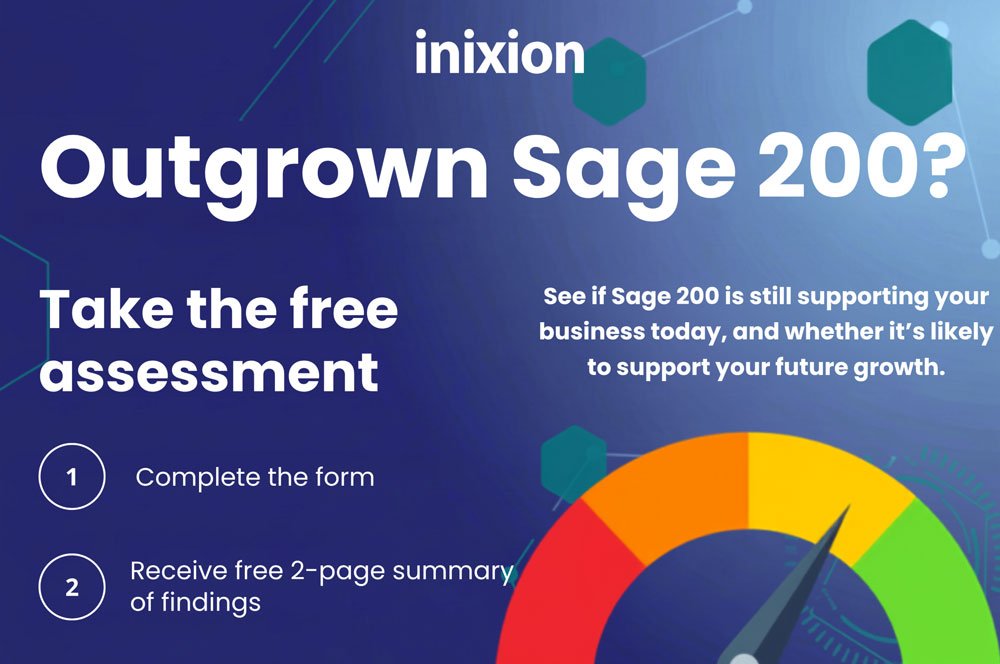
Take your free Sage 200 assessment below to see if Sage 200 is still supporting your business needs.
FAQs
Cloud-native means the solution is purpose-built for the cloud, not simply hosted there. It gives you secure, browser-based access to your data anytime, anywhere, from any internet-connected device. By eliminating the need to manage on-premises infrastructure, it also frees up time and resources to focus on strategic priorities.
With almost 20 years of Sage ERP experience and a 100% project success rate, Inixion is trusted by UK businesses to deliver smooth, stress-free implementations.
Inixion offers tailored training sessions, onboarding support, and ongoing UK-based support to ensure your team is confident from day one.
Yes. It supports multi-entity organisations with real-time consolidation, intercompany automation, and full currency management.
With the right partner, migration is relatively straightforward. Inixion has almost 20 years of experience in implementing business management solutions and uses a trusted migration process to ensure clean data, minimal disruption, and maximum continuity.
Sage Intacct addresses common challenges like limited remote access, manual consolidations, lack of real-time dashboards, on-premises IT requirements, and limited multi-entity or multi-currency support.
Moving to Sage Intacct from Sage 200 is a significant upgrade. Sage Intacct is a next-generation, cloud-native financial management system designed to streamline operations and scale with your business.
Sage Intacct offers true cloud-native capabilities, real-time reporting, automated processes, and better scalability, perfect for growing businesses needing more flexibility and insight than Sage 200 can offer.